Why DJs Should Learn AI Production in 2026
AI can now make a finished track in minutes. For DJs, this is not a threat. It is the biggest opening in a decade.
Get the Free 2-Day Masterclass →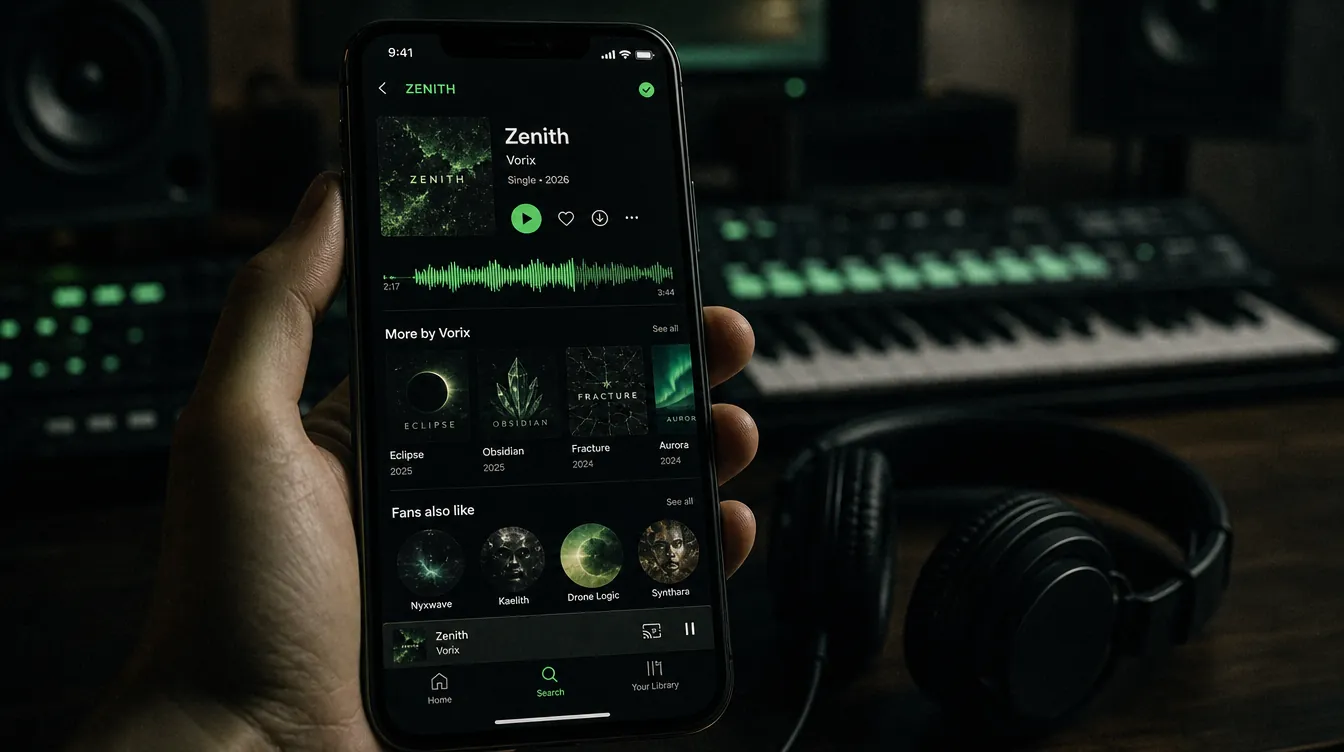
The tools changed overnight. The DJs who pick them up first will define the next sound.
The Music Flood Is Already Here
AI tools can now write, perform, and master a finished track in under ten minutes. Type a few words. Pick a genre. Press a button. A full song appears. Tools like Suno and Udio (websites that generate complete music from a text description) have made this normal in less than two years.
This means one thing for music: the flood is here. Spotify passed 100 million tracks in 2024. Now tens of thousands of new songs arrive every single day. Much of it is made by AI.
Most DJs hear this and feel fear. "If a computer can make a track in ten minutes, what happens to me?"
That fear points the wrong way. Here is the truth, stated plainly. When music becomes easy to make, music does not become valuable. Taste becomes valuable. The ability to choose becomes valuable. The ability to filter the flood becomes valuable.
This is a gold rush. And in every gold rush, the smart money does not dig for gold. The smart money sells the shovels. In the streaming age, the shovels are two things: the playlists that decide what gets heard, and the skill to make tracks fast enough to fill them. DJs are positioned to own both.
This article makes the honest case for the second one. Not hype. Not "AI will make you rich." Just the real reasons a working DJ should learn AI production in 2026, and the real limits you should know before you start.
"Isn't AI Music Going to Replace Me?"
Let us deal with the fear first, because it is the thing blocking most DJs from even looking.
The fear is that AI music replaces human music makers. That listeners will not care who made a track, so skill stops mattering.
Look at what actually happened in other fields. When the camera was invented, painters panicked. Painting did not die. It changed. When digital cameras arrived, photographers panicked. Photography did not die. The number of photographers grew. When drum machines arrived in the 1980s, drummers panicked. Live drummers are still booked every weekend.
Every time a tool makes creation easier, two things happen at once. The floor drops, so more people can make something. And the ceiling rises, so the people with taste and skill stand out more, not less.
AI music follows the same pattern. The flood of AI tracks is mostly average. It all sounds similar. It has no story, no scene, no face behind it. That is exactly why a DJ with real taste, a real audience, and a real ear becomes more valuable, not less.
A DJ is not competing with AI. A DJ is learning to use AI as one more tool in the bag. The same way they learned to use a laptop instead of vinyl, or a controller instead of CDJs. The tool changed. The job — moving a room, knowing what sounds good — did not.
What Learning AI Production Actually Gives You
So why should a DJ learn it? Four concrete reasons. No abstractions.
1. You Can Make Your Own Edits and IDs in Minutes
Every DJ wants tracks no one else has. A special edit. A remix. An exclusive ID that makes the crowd ask "what is that?" In the past, making one took days in a music program and years of production skill. AI tools change the time cost. A DJ can now sketch an idea, generate stems and elements, and shape them into a usable edit in an afternoon. The taste — knowing what works on a dance floor — is the part the DJ already has. AI fills in the slow technical part.
2. You Can Fill Your Own Playlists With Your Own Music
This is the part that connects directly to income. A DJ who runs a Spotify playlist (a channel they own and grow — see our guide on why every DJ should own playlists) can place their own tracks inside it. Every play earns a small streaming royalty. One track in a well-followed playlist might pull 3,000 to 8,000 plays a month. Across many tracks and a full year, that adds up to $2,000 to $12,000 in royalties — the kind of ranges our Curator Earnings Index tracks across real curators. Before AI tools, making enough quality tracks to fill a playlist took years. Now a DJ can build a real catalog far faster.
3. You Stop Paying Other People for Simple Work
Many DJs pay producers for ghost-production, edits, or mixdowns. Those fees add up. Learning AI production does not replace a great human producer for a flagship release. But it removes the need to pay someone for every small edit, intro, or transition. The DJ keeps that money.
4. You Move at the Speed of the Moment
A track goes viral on TikTok on a Tuesday. The DJs who can make a bootleg or edit by Friday own the weekend. Speed is a real advantage now. AI production is the tool that gives a DJ that speed without a full studio team.
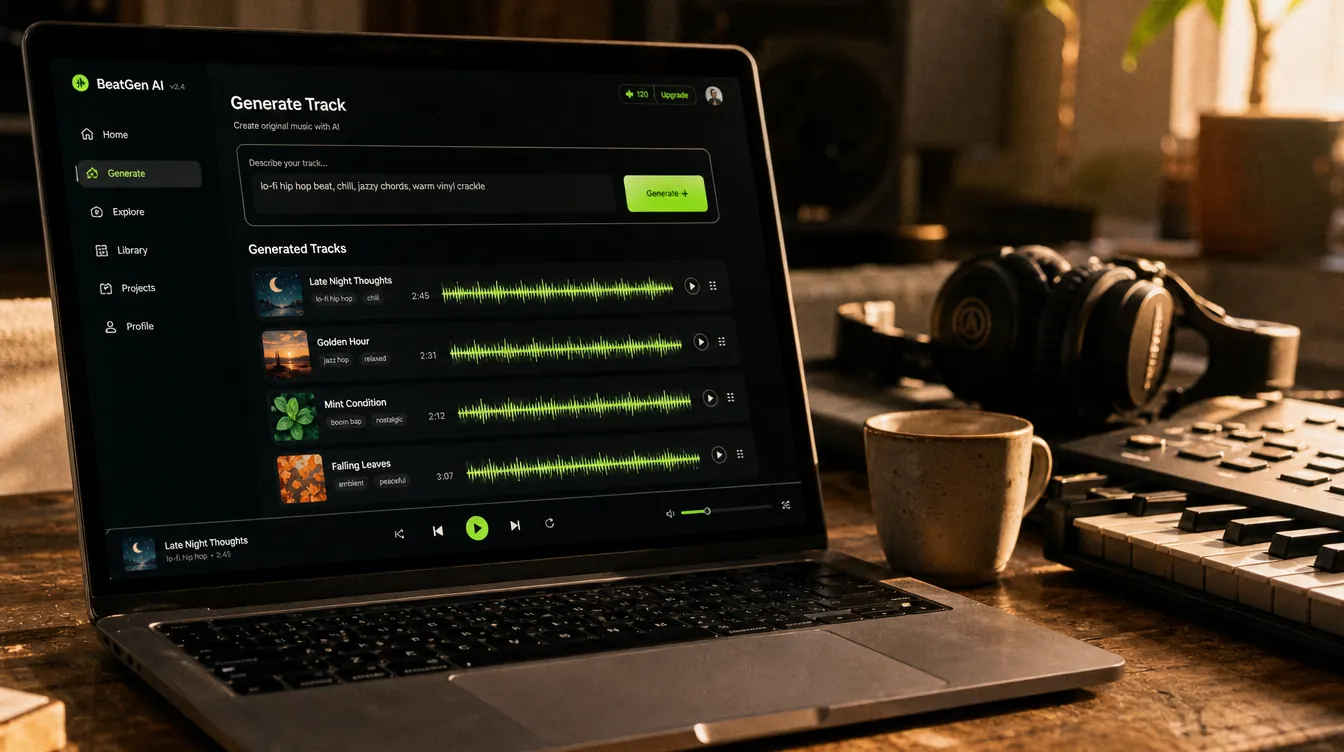
The bedroom studio just got a co-producer. The DJs who learn to direct it move faster than anyone before them.
The Honest Limits (Read This Before You Start)
This is a reality check, not a sales pitch. So here are the real limits. Anyone who skips this part is selling you something.
AI does not give you taste. It gives you speed. If you do not already know what a good track sounds like, AI will help you make average music faster. The DJ's ear is still the most important tool. AI is useless without it.
Raw AI output is rarely finished. The first version a tool gives you is a starting point, not a master. It needs editing, arranging, mixing, and a human decision about what to keep and cut. Treating AI output as a finished song is the most common beginner mistake.
The legal and platform rules are still settling. Spotify and other platforms are writing new rules about AI music as we speak. Today, AI-assisted tracks are widely accepted, especially when a human shapes the final result. But the ground is moving. Stay informed. Do not bet your whole catalog on rules that may change.
It will not make you a producer overnight. AI shortens the technical learning curve. It does not delete it. You still need to learn arrangement, structure, and how to make a track sit right in a mix. AI makes that journey faster and less frustrating. It does not make it disappear.
The DJs who win with AI production treat it as an instrument. They learn to play it. They do not expect it to play itself.
Why DJs Are Better Positioned Than Anyone
Here is the part nobody talks about. DJs are the single best-positioned group to win with AI production. Better than bedroom hobbyists. Better than tech people. Better than most trained producers. Three reasons.
DJs already have taste. The hardest skill in music is knowing what sounds good and what a room wants. That takes years behind the decks. AI cannot give it to anyone. DJs already have it. They just point it at a new tool.
DJs already have a place to put the music. A bedroom producer makes a track and then asks "now what?" A DJ has answers. Play it in the set tonight. Put it in the owned playlist. Test it on a real crowd. The track has a home before it is even finished.
DJs already have an audience. Fans at the shows. Followers online. People who trust their selections. That audience is the launch pad for every track a DJ makes. A new AI track from a faceless account starts at zero. A new track from a known DJ starts with a crowd.
Put simply: AI gives everyone the ability to make music. It gives DJs the ability to make their music count.
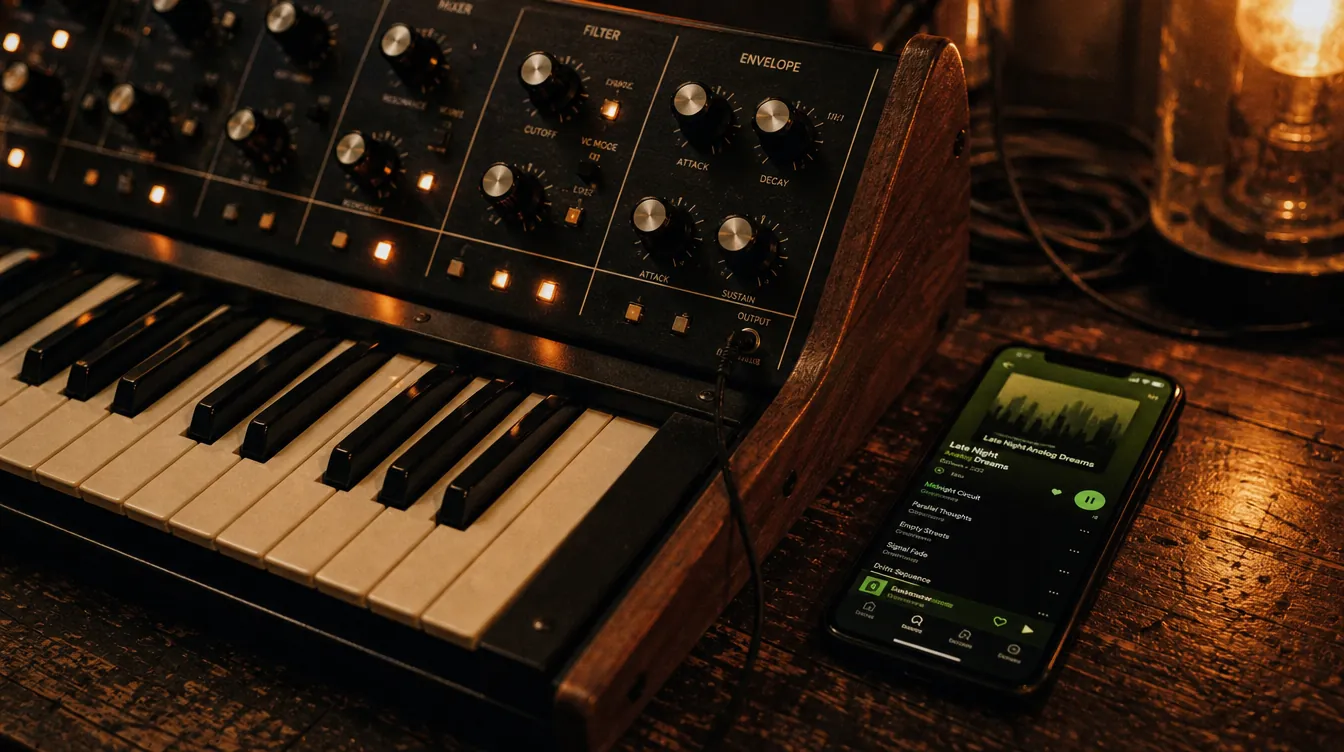
Analog or AI, the job never changed. Make something worth hearing, and make sure people hear it.
How a DJ Should Actually Start
For a DJ who wants to begin, the path is simple. Do not try to learn everything at once.
Step one: pick one tool and make one track. Do not research forty platforms. Pick one well-known generator. Spend one afternoon making a single track from start to finish. The goal is not a hit. The goal is to learn the loop: idea, generate, edit, finish.
Step two: finish it properly. Take that raw output and shape it. Arrange it. Clean the mix. Make it something you would actually play. This step teaches you more than any tutorial.
Step three: test it on a real crowd or your playlist. Play it out. Or place it in your Spotify playlist and watch the numbers. Real feedback beats opinions. The dance floor does not lie.
Step four: repeat until it is a habit. The skill comes from reps, not from reading. Ten finished tracks teach more than a hundred hours of watching.
That is the whole method. Pick a tool. Finish a track. Test it. Repeat.
Want the Full DJ-to-Producer Path?
If learning AI production is the move you feel pulled toward, there is a full course that walks a DJ through the whole journey — from first track to a finished, playlist-ready catalog. The Producer Upgrade course is built for DJs who want to make their own music without spending years in a studio first.
It is the practical, step-by-step version of everything in this article.
Start With the Foundation: The DJFREEDOM Masterclass
Before you produce the music, it helps to own the channel that plays it. The DJFREEDOM Masterclass is a free 2-day video course on building a Spotify playlist asset from zero — the home for every track you will ever make.
- Day 1: Playlist strategy, naming, positioning, and your first 50 tracks.
- Day 2: Growth tactics, submission platform setup, and your first revenue stream.
No cost. Just practical steps from operators who run real playlists with real income.
Frequently Asked Questions
Can AI really make a full song by itself?
Will learning AI production replace my need to learn real production?
Is AI music allowed on Spotify?
Do I need expensive gear to start AI production?
Why are DJs better positioned for AI production than other people?
Your Move
The flood of AI music is not slowing down. It is speeding up. That flood does not lower the value of taste, an audience, and a real ear. It raises it.
The DJs who learn to direct these tools — not fear them — will make their own music, fill their own playlists, and move at the speed of the moment. The ones who wait will be buying those same tracks from the DJs who started first.
That is the reality check. The tools are here. The opening is now.