How Much Do Spotify Playlist Curators Actually Make?
Every day, thousands of independent musicians pay submission platforms to get their tracks reviewed. The reviewers — independent playlist curators — get paid for every track they listen to. Some earn a hundred dollars a month from it. A few have quietly scaled it past ten thousand. This is the investigation nobody else publishes: real ranges, real methodology, and a side-by-side against every other online side hustle.
Read the Full Investigation →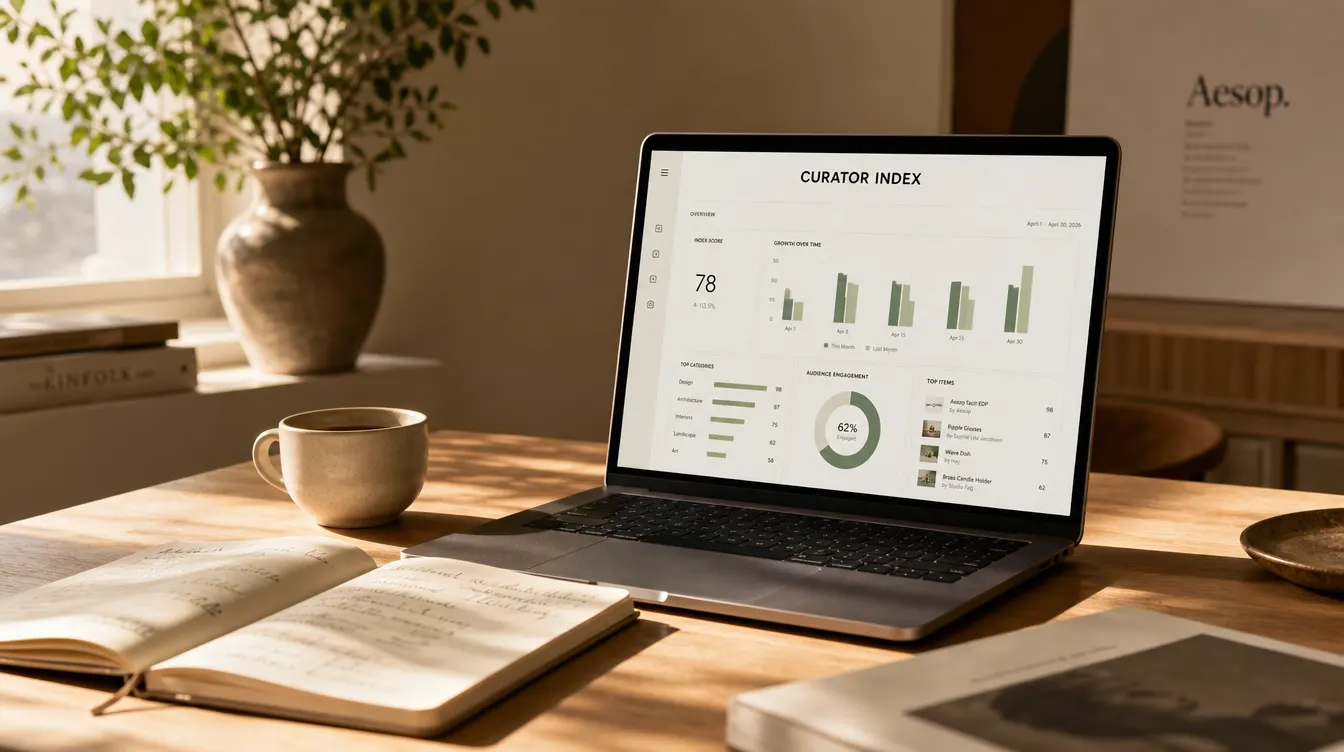
Some curators earn $100 a month. Some have scaled this to a $10,000+ business.
Across the operator network we tracked for this report, monthly income from Spotify playlist curation spreads across a wide range. Some operators earn around $100 a month — typically newer accounts with one Spotify profile and limited genre coverage. Most active operators settle into the $500 to $2,000 range as their submission flow stabilizes and their genre profiles compound. A smaller, harder-to-pin-down group has scaled this into a $10,000+ per month business, treating it less as a side hustle and more as a full operation across multiple Spotify accounts and submission platforms.
The economy is still being mapped. Outliers exist in both directions. What's reported below are the realistic ranges across the operators we've observed.
| Tier | Typical monthly income | Operator profile |
|---|---|---|
| Beginner | ~$100 / month | One Spotify account, single genre, learning submission flow |
| Established | $500 to $2,000 / month | Multi-genre profile, stable SubmitHub flow, partial PlaylistPush activity |
| Operating | $2,000 to $5,000 / month | Mature account, multi-platform submissions, consistent reinvestment |
| Scaled | $10,000+ / month | Multiple Spotify accounts, full submission stack, small team |
The economy is real, the numbers are documented, and the people earning them are mostly operating in silence. What follows is a platform-by-platform breakdown of how the income actually works.
The Foundation: SubmitHub
SubmitHub is the largest submission platform in independent music. Artists pay to submit tracks to curators. Curators get paid for every review they complete. It's the most consistent monthly income stream in the entire curator economy.
What the platform actually pays:
| Pay per review (starting tier) | $0.50 |
| Pay per review (capped tier) | $2.00 |
| Reviews per day per profile | 5 to 300 depending on submission flow and genre demand |
| Realistic monthly per account | $50 to $2,000+ |
New curator profiles start at $0.50 per review. The platform pays operators more as they build authority signals over time — completing more reviews, maintaining playlists with engaged followers, and being consistent. The pay rate ladders up through tiers, capped at $2.00 per review. The platform does not pay above $2.00 for standard reviews.
This "work your way up" mechanic is the part most outside reporting misses. The headline rate is not the starting rate. A first-month curator typically earns the lower end of the range. By month six to nine of consistent reviewing, the higher tier becomes accessible.
Daily review volume swings dramatically. Some profiles in flat genres see 5 reviews a day. Profiles in active genres during release-heavy weeks can process 200 to 300 a day. June and July are reliably high-volume months. December collapses to a trickle.
The Wild Card: PlaylistPush
PlaylistPush pays per placement, not per review, which makes the income math wildly more volatile than SubmitHub. Some weeks pay nothing. Some weeks pay several hundred dollars. The advertised maximum has been one of the most over-quoted numbers in the playlisting space.
What the platform actually pays:
| Pay range per review / placement | $0.50 to $15.00+ |
| Reviews per day per profile | 0 to 15+ depending on matching algorithm and platform-side commercial flow |
| Realistic monthly per account | $100 to $2,500+ |
The advertised "up to $15 per review" sells the upside without describing the floor. Operators with new profiles or in less-commercial genres frequently see reviews in the $0.50 to $3.00 range. The high end is real but conditional on matching, genre commerciality, and platform-side prioritization that operators do not control.
This is the platform that misleads new curators most often. The marketing suggests a steady path to several thousand dollars a month per account. The reality is far less predictable, with monthly totals swinging by hundreds of percent between weeks.
The Quiet Bonus: Streaming Income From Your Own Music
Operators who also produce or release music themselves can place their own tracks (or tracks from artists they have direct relationships with) into the playlists they run. This adds a streaming-royalty income stream on top of the curator-side income — without any additional time investment per month.
The catalog play compounds. A back catalog of 30 to 50 tracks placed strategically across a curator's own playlists creates a permanent baseline of streams. The 30th track does not stop earning when the 31st gets added. Most established operators report streaming income in the ~$500 per month per account range, sometimes meaningfully more for prolific producers.
Don't have your own music to place? This is the easy step.
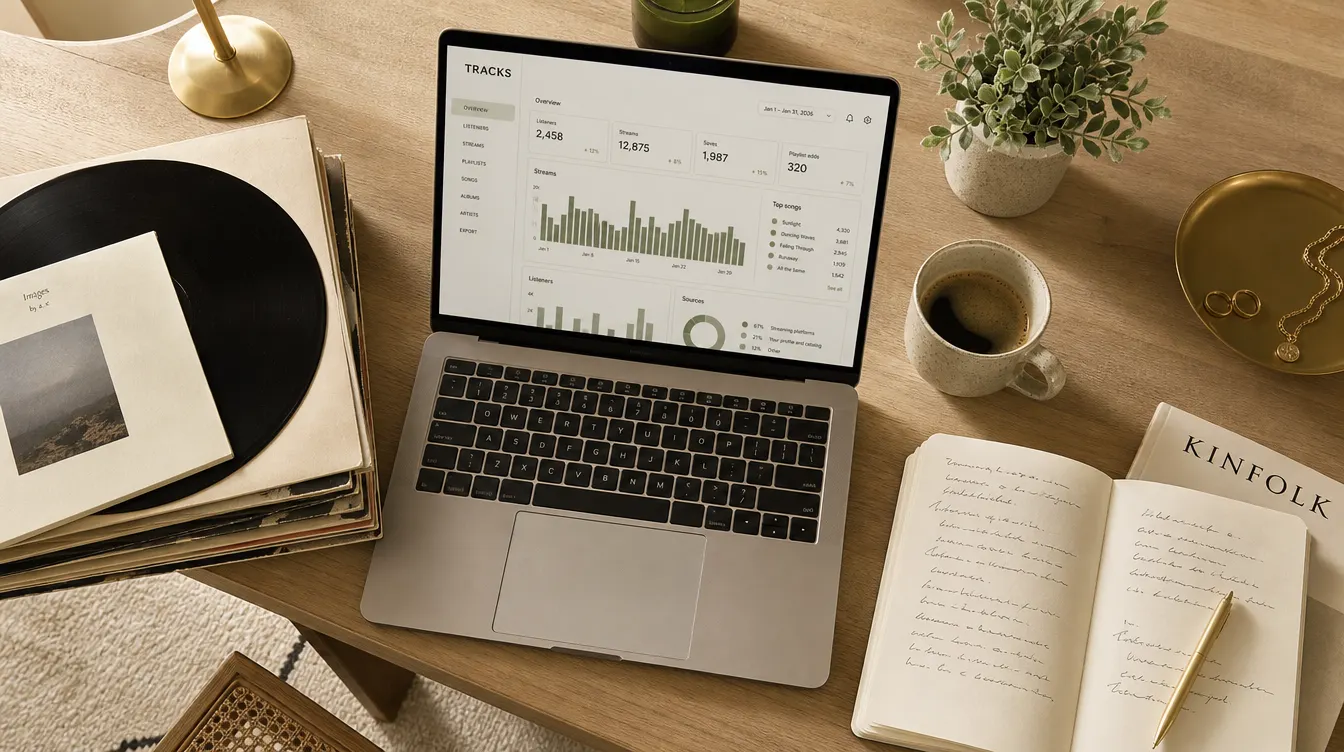
Most DJs and curators-to-be we spoke with assumed they had to either learn a DAW from scratch or hire a producer to put out their own music. Neither is true anymore. The 2026 toolset makes it possible to release playlist-ready tracks in 60 to 90 minutes, no plugins, no studio, no traditional production skill. There's a full step-by-step available externally.
The Costs Nobody Publishes
Curator income is not pure profit. Anyone who tells you otherwise is selling something. The operators we spoke with reported the following cost lines per account per month:
| Cost line | Range per account / month |
|---|---|
| Reinvested ad spend (Meta and Spotify ads to grow playlists) | 15% to 50% of monthly earnings |
| Distributor fees for the producer-operator bonus track | $20 to $80 |
| Tool subscriptions (artist.tools, scheduling, design tools) | $30 to $100 |
| Team cost (review processing at higher tiers) | Variable — scales with revenue |
The reinvestment ratio is the load-bearing cost. Operators in the network typically reinvest between 15% and 50% of every dollar back into advertising and marketing — the higher end for operators who are still learning the advertising side or just starting out, the lower end for experienced operators with calibrated ad systems. New operators commonly start near 50% because the early growth curve is the hardest to manufacture without paid amplification. As ad efficiency improves, the ratio drops.
Solo operators cap at three to six hours of review work per day. A small team unlocks volume but introduces new fixed costs. Honest net margin after all costs, before tax, before the additional stacked platforms: in the 40% to 65% range, varying with operator experience and reinvestment discipline.
The Pattern Every Operator Confirmed
Across multiple years of network data, the seasonality pattern is identical every cycle.
December is a dead zone. Almost no one releases music in the two weeks around Christmas. Submission volume drops 60 to 80 percent across the network. Operators who started their accounts in December and concluded "this doesn't work" started in the worst possible month.
Summer is fire. May through August. Releases stack, festivals push promo cycles, submission volume can double. June and July are reliably the highest-earning months on every account in the network.
Q1 is a rebuild quarter. Volume climbs back from the December collapse. Real money returns mid-February.
Q4 is harvest season. October hits the autumn peak, November plateaus, December collapses through Christmas. Operators plan ad reinvestment to peak in October and coast through December.
The Three Wrong Numbers You'll See Everywhere
The playlisting space is full of misleading numbers. Below are the three most commonly cited sources of curator earnings data and what's actually wrong with each.
ZipRecruiter — "Playlist Curator Salary: $33,000 to $88,000 per year"
ZipRecruiter's headline number is for "playlist curator" job titles at record labels and streaming platforms. That describes a salaried employee at Sony or Spotify, not an independent operator. A salaried curator at a label picks songs that someone else owns. An independent operator owns the playlists, owns the audience, and earns from the entire revenue chain. The two have nothing in common except the word "curator." The ZipRecruiter number is correct for the role it describes but wildly misleading as a guide for what an independent operator earns.
PlaylistPush's own blog
PlaylistPush publishes ranges on its own blog about how much its curators earn through its platform. The numbers are real for that platform but dramatically incomplete. They describe only what PlaylistPush specifically pays, ignore the rest of the curator-side stack, and have an obvious commercial incentive to make the curator side look attractive enough to recruit more curators. Reading PlaylistPush's blog about curator income is reading the marketing material of one platform in the stack, not an analysis of the full stack.
The generic SEO-farm tier
A wave of SEO blogs publishes "how much do Spotify playlist curators earn" articles that quote ranges with no methodology, no dashboards, no proof of authorship, and no named operators. They exist to rank for the search query and capture affiliate clicks. Some are honest summaries. Many are pure invention.
If a curator-income article cannot show methodology or name specific platform rates, it is opinion, not data.
The Five Red Flags of Scam Playlisting Content
Red Flag 1
Income claims with no platform attribution. Real curator income comes from specific platforms with specific rates. If an article says "operators make $X per month" without naming WHERE, it is guesswork.
Red Flag 2
No timeline. Real income builds over months. Pages that quote "$10,000 per month" without specifying month 1 versus month 24 are skipping the part that matters most.
Red Flag 3
No methodology, no source. Curator income is verifiable. The lack of methodology is itself the red flag.
Red Flag 4
Services offering guaranteed playlist placements to artists for cash. This is the actual scam in the industry. It violates Spotify's terms of service and exists entirely outside the approved submission-platform economy. Real curator income comes from reviewing submissions on platforms like SubmitHub and PlaylistPush, not from being paid directly by artists.
Red Flag 5
Bot-driven or fake-follower playlists. Operations that buy followers, run bots to inflate listens, or operate sock-puppet accounts. These violate Spotify's TOS, get accounts banned, and corrupt the data the real economy runs on.
Playlist Curation vs the Other Online Side Hustles
Almost everyone asking "how much do playlist curators earn" is comparing the answer against another path they could take instead. Dropshipping. Faceless YouTube. Affiliate marketing. Print-on-demand. Newsletter writing. Course selling. Day trading. Here is the comparison nobody else in the playlisting space publishes.
| Side hustle | Time to first $1k/mo | Defensibility | $/hour | Lifestyle | Saturation 2026 | Startup cost |
|---|---|---|---|---|---|---|
| Spotify Playlist Curation | 3-9 months | HIGH | $20-$200+ | Music-adjacent | LOW | $0-$500 |
| Dropshipping | 1-12 months | LOW | $5-$50 | Phone-tethered | VERY HIGH | $500-$2,000 |
| Faceless YouTube | 6-18 months | MEDIUM | $15-$100 | Studio-tethered | HIGH | $200-$1,000 |
| Affiliate marketing | 6-24 months | LOW-MED | $10-$80 | Content treadmill | HIGH | $0-$500 |
| Print-on-demand | 3-12 months | LOW | $10-$60 | Design treadmill | VERY HIGH | $0-$200 |
| Newsletter / Substack | 6-24 months | MEDIUM | $20-$150 | Writing treadmill | HIGH | $0-$100 |
| Course selling | 6-24 months | HIGH | $50-$500 | Marketing-tethered | HIGH | $200-$2,000 |
| Day trading | Never. Most lose. | NONE | Negative 90%+ | Screen-tethered | VERY HIGH | $1k-$10k+ |
↔ scroll horizontally on mobile to see all columns
The verdict: playlist curation wins on most dimensions that matter.
vs Dropshipping. Dropshipping competes on ad price and supplier sourcing. Both axes get worse every quarter. Playlist curation competes on taste and platform relationships. Both axes get better every quarter of operation. Dropshipping caps. Curation compounds.
vs Faceless YouTube. Faceless YouTube depends entirely on the algorithm. A single change can wipe a channel in thirty days. Curator income depends on platform relationships and catalog across multiple platforms. No single platform change wipes an operator.
vs Affiliate marketing. Affiliate marketing is rented audience and rented platform. Playlist curation is owned playlists and owned curator relationships.
vs Print-on-demand. POD is design arbitrage on top of a saturated market. Curation is taste arbitrage in an under-served one.
vs Newsletter / Substack. Both require taste. Newsletter is a one-to-many content treadmill. Curation is many-to-one filtering that pays per review. The treadmill never stops on a newsletter. Curation pays while you sleep.
vs Course selling. Honest tie. Both build catalog assets. Course selling depends on continuous content marketing. Curator income is structural, not promotional.
vs Day trading. Not a comparable category. 90% of retail day traders lose money. Playlist curation is operating a business. Day trading is paying market makers.
Methodology
The data in this report draws from observation of operators in the Playlister Club network across multiple Spotify accounts, multiple submission platforms, and multiple years. Numbers represent network-level benchmarks, not any single operator's personal P&L.
What's exact: SubmitHub's per-review pay floor ($0.50) and cap ($2.00). PlaylistPush's per-review pay range. The industry-standard reinvestment ratio. The seasonality pattern.
What's averaged: Reviews per day and monthly totals per account. Both vary 30 to 50 percent month-to-month at the individual level. The numbers reported represent realistic averages across the network, not best months or worst months.
What's intentionally not detailed: Specific operator names. Exact account counts. The full list of additional submission platforms in the operator stack. Specific team structures. Individual income totals. These omissions protect the operators in the network and the operating edge of the business model.
Update cadence: Monthly. Each update appears with a timestamp and a "what changed" log.
Data integrity: If any number on this page is shown to be wrong, the correction will be published at the top of the page, dated, with methodology of the correction. No silent edits.
FAQ
How much do Spotify playlist curators actually make?
How much does SubmitHub pay curators per review?
Is playlist curation legal?
Can a small playlist make money?
How long until a new curator account starts earning?
Is playlist curation a scam?
Does Spotify allow this?
Can someone do this without being a DJ or producer?
How does this compare to dropshipping or faceless YouTube?
What's a realistic monthly income for a beginner?
If You Want the Full Operator Playbook
This report is the public benchmark. The full operator playbook — every platform in the stack, the growth methods, the monetization mechanics, and what scaled operators do differently — is in the free 2-Day Playlister Club Masterclass.
The Free 2-Day Playlister Club Masterclass
Inside the masterclass:
- The hidden side of Spotify that the platforms profiting from you don't want you to see
- How to build your first profitable playlist from zero (no audience, no DAW skills, no label)
- How playlists actually grow — the three mechanics that compound month over month
- The two monetization methods that scale beyond a single submission platform
- What operators in the scaled tier do differently