Passive Income for DJs: Why Playlist Curation Beats Every Other Side Hustle in 2026
The side-hustle listicles bury it at number six. Here is why it should be number one.
Get the Free 2-Day Masterclass →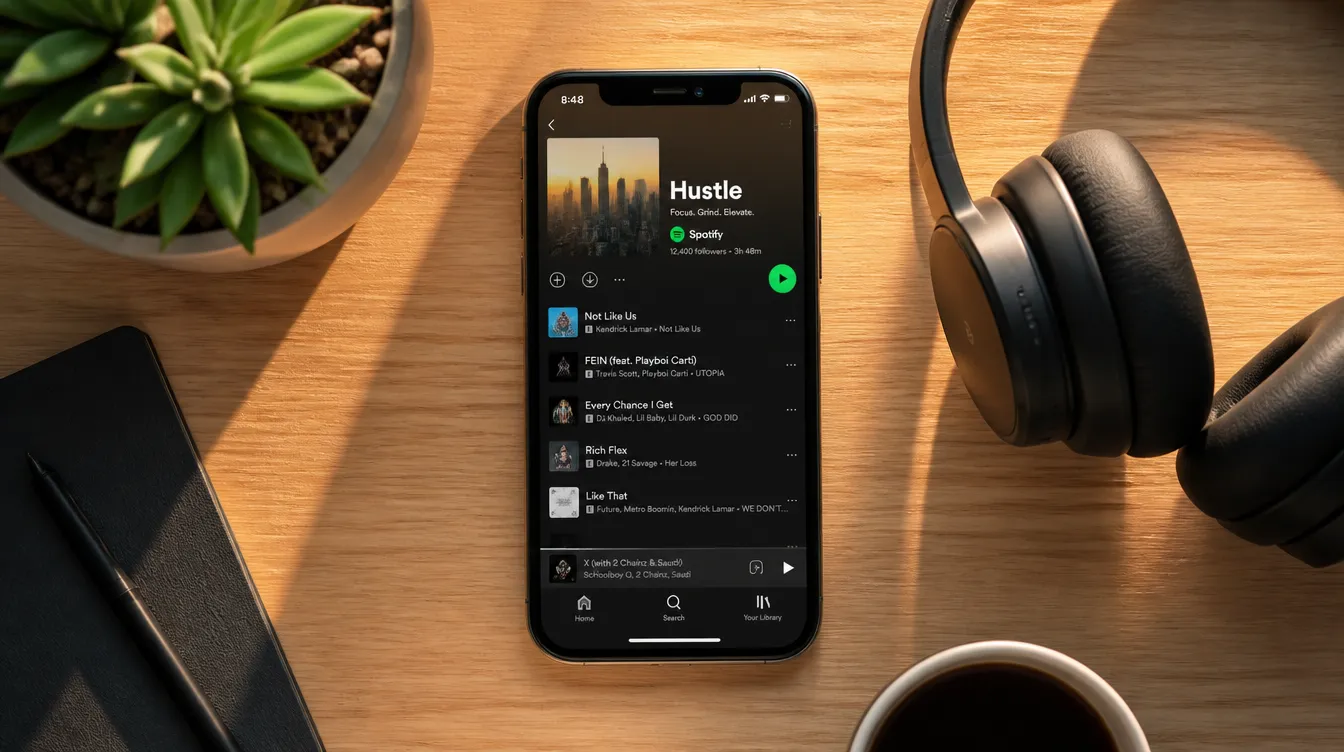
The gold rush is digital. The DJs who build playlists first win twice.
Why Playlist Curation Belongs at Number One
Search the internet for "passive income for DJs." You will find the same list over and over. Teach music lessons. Sell sample packs. Make beats for other people. Somewhere near the bottom, they mention playlist curation. Then they move on.
That ranking is wrong.
Here is what is happening right now. Every day, AI tools make thousands of new songs. These songs go onto apps like Spotify. Spotify already has over 100 million tracks. The number keeps growing.
With so much music, the hard part is not making songs anymore. The hard part is finding the good songs in all that noise. Someone needs to sort through the flood and pick the best ones. That person is called a playlist curator. A curator is someone who builds and manages a playlist on Spotify. They choose which songs go in and which songs stay out.
Right now, curators are in high demand. Artists need curators to help people hear their music. Listeners need curators to find songs they will love. The more music that exists, the more valuable a good curator becomes.
This article explains why playlist curation is not just another side hustle for DJs. It is the best one. We will show you real numbers, honest comparisons, and the simple math that makes curation different from every other option on the list.
The Side-Hustle Listicle Problem
Open any "passive income for musicians" article. You will find the same list: teach lessons, sell beats, offer mixing services, create sample packs, ghost-produce, license music to film and TV. These are all real income streams. But they share one problem.
They trade your time for money.
Every lesson you teach requires you to show up. Every ghost-production job starts from zero when you deliver the final file. Every sample pack earns its biggest sales in the first week and then fades. None of these income streams grow while you sleep.
Playlist curation is different. A playlist you build today keeps gaining followers tomorrow. Every new follower makes your playlist more valuable to the next artist who submits a track. The work you did last month is still earning this month. That is what makes curation a true passive income stream — not a freelance gig dressed up as one.
The typical listicle does not understand this difference because the writers are not curators. They are content marketers ranking income streams by familiarity, not by leverage.
What Playlist Curation Income Actually Looks Like
Before we compare, here are the real numbers. We track curator earnings across four income streams in our Curator Earnings Index, updated monthly with data from working curators.
Stream 1: Submission Reviews
Platforms like SubmitHub (a website where artists pay curators a small fee to review their tracks) pay curators $1.50 to $4.00 per review. A curator with 5 active playlists averaging 10,000 followers each can process 200 to 400 reviews per month. That is $300 to $1,600 per month from reviews alone.
Stream 2: Streaming Royalties from Your Own Tracks
When you place your own music on your own playlists, you earn royalties from every play. A single track on a 25,000-follower playlist can earn $10 to $40 per month. Across 5 playlists with 3 to 5 own tracks each, that is $150 to $800 per month — and it compounds as you add more tracks over time.
Stream 3: Sponsored Playlist Descriptions
Brands pay curators $50 to $200 per month to feature a short text mention in the playlist description. This stream is small but pure profit — no extra work after the initial deal.
Stream 4: Retainer Review Deals
Labels and distributors pay curators a monthly fee — typically $200 to $500 — for priority review access. The curator is paid for their time, their listening ear, and their editorial expertise. Not for any guaranteed outcome on a track. This is the same model used by SubmitHub at the per-review level, scaled into a monthly relationship. This is the modern radio promoter model — indie radio of the streaming age.
Total range: A beginner curator earns $100 to $300 per month within the first 6 months. An established curator with 5 to 10 playlists totaling 50,000 to 100,000 followers can earn $2,000 to $5,000 per month across all four streams.
Stream by Stream: Why Curation Wins
Here is the honest comparison. We scored six common DJ side hustles on five factors that matter most for long-term income.
| Income Stream | Startup Cost | Time to First $ | Scalability | Passive Potential | Compounds? |
|---|---|---|---|---|---|
| Playlist Curation | $0-50 | 30-60 days | High | High | Yes |
| Teaching Lessons | $0 | 1-7 days | Low | None | No |
| Sample Packs | $50-200 | 30-90 days | Medium | Medium | No |
| Ghost Production | $0 | 14-30 days | Low | None | No |
| Mixing/Mastering | $100-500 | 7-14 days | Low | None | No |
| Merch/Merchandise | $500-2,000 | 60-120 days | Medium | Low | No |
Teaching pays faster. Ghost production pays per project. But only one income stream on this list keeps growing after you stop working on it. Playlist curation is the only one where the asset you build (your playlist and its followers) increases in value every month.
Sample packs come close — they sit on a marketplace and sell without your input. But a sample pack does not gain followers. Its sales peak in week one and decline. A playlist does the opposite. Its value rises over time as more listeners follow and more artists want access.
The startup cost for curation is near zero. You need a Spotify account, a few hours to build your first playlist, and the willingness to listen to 20 to 30 tracks per day. No studio gear. No website. No inventory.
The Compounding Effect Nobody Talks About
This is the part that changes the math.
Most DJ side hustles are linear. You work one hour, you earn one payment. You stop working, you stop earning. Playlist curation works on a different curve.
Month one, your playlist has 500 followers. You earn $20 from a handful of reviews. Month six, your playlist has 5,000 followers. Now artists are willing to pay more to reach your audience. Your per-review rate goes up. You also have 3 of your own tracks placed, earning streaming royalties every day.
Month twelve, your playlist has 15,000 followers. A small label offers you a monthly retainer. Your streaming royalties have compounded across 8 of your own tracks. The same playlist you built 12 months ago — the one that took you a few hours to set up — is now earning $800 to $1,200 per month across all streams.
You did not work harder. The asset grew.
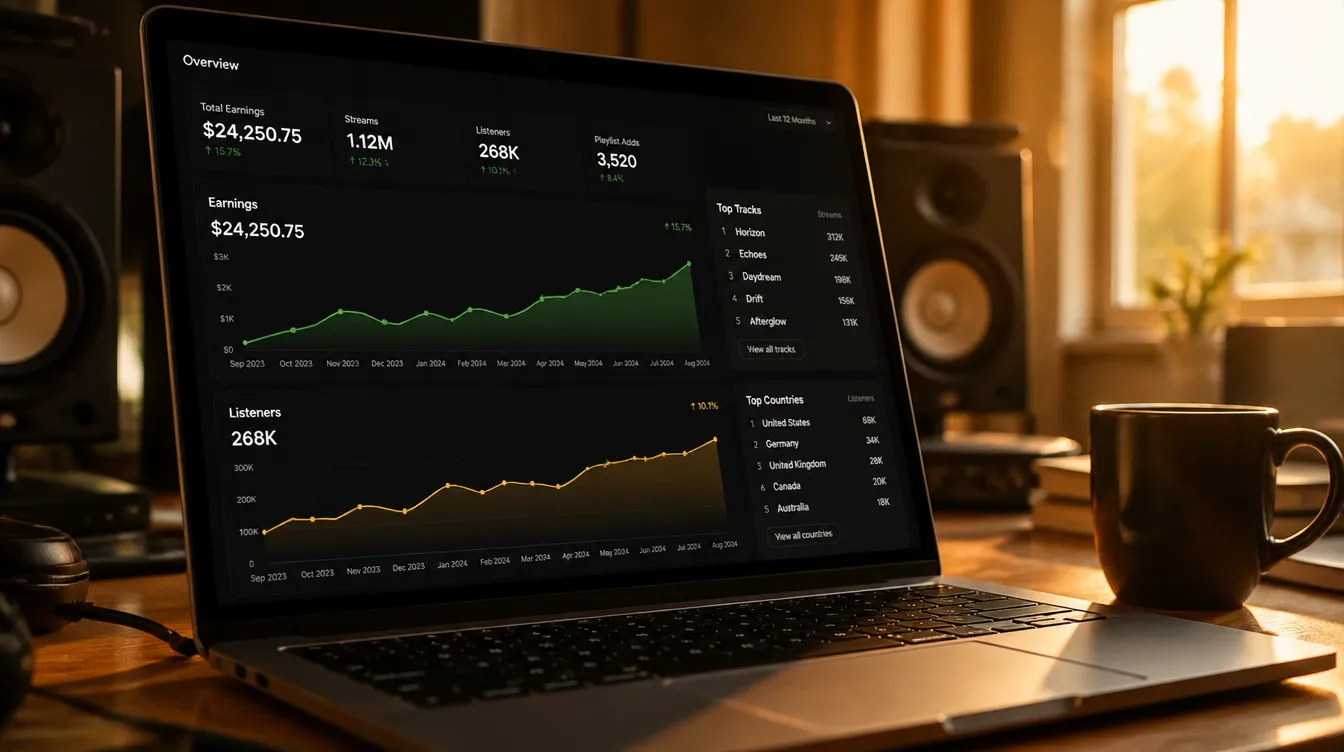
The playlist asset compounds. Every month of curation makes the next month more valuable.
The AI Accelerant
There has never been a better time to start playlisting. AI music tools have made it possible for DJs to produce release-ready tracks in hours instead of months. That means more original music to place on your own playlists. More tracks earning royalties. More material to submit to other curators for cross-promotion.
The gold rush is real. Streaming platforms are flooded with new music. Listeners are drowning in choice. The people who build the discovery layer — the curators who sort through 100 tracks to surface the 5 worth hearing — are more valuable than ever.
Every new AI-generated track that hits Spotify is another reason for curators to exist. More music means more noise. More noise means more demand for trusted playlists. The tastemaker economy is growing because the supply of music is growing faster than the supply of good taste.
For the full breakdown of how each income stream works with current dollar figures, see our Curator Earnings Index. For a deeper look at the specific ways curators turn playlists into income, read How Spotify Playlist Curators Actually Make Money in 2026.
The Unfair Advantage DJs Already Have
Most playlist curators are music fans who started sorting songs into playlists for fun. They learned curation by trial and error. DJs start with an edge that takes non-DJs years to develop.
You already know what moves a crowd. You understand energy flow — how to build tension, when to drop, when to pull back. You know genre boundaries and where they blur. You know the difference between a track that sounds good on headphones and one that fills a room.
That ear is the most valuable tool in playlist curation. A curator without DJ experience has to guess whether a submission fits their playlist. A DJ-curator knows in 15 seconds.
You also have something most curators do not: a network. Other DJs, promoters, labels, and artists already know you. When you launch a playlist, your existing connections become your first followers and your first submitters. That head start can cut months off the growth curve.
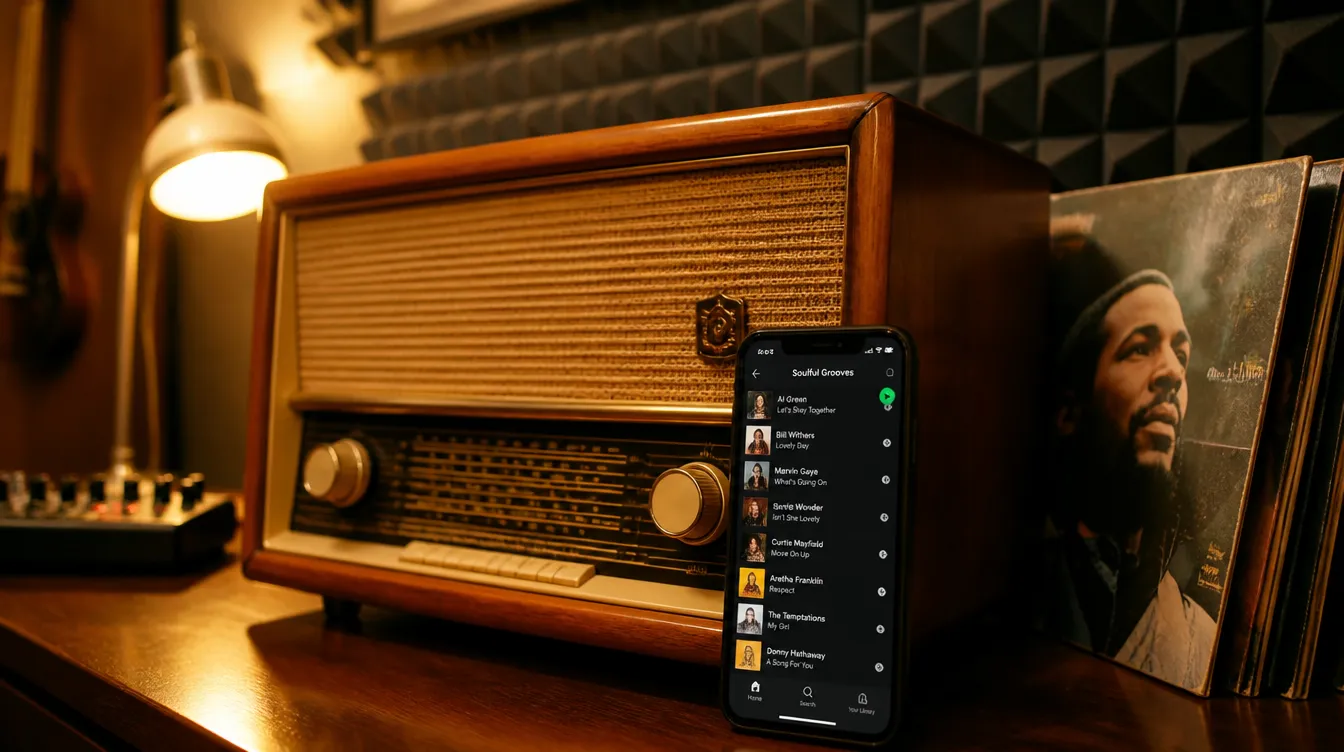
From analog radio to digital playlists. The role of the tastemaker never changed — only the medium.
How to Start This Week
You do not need a business plan. You need four steps and 30 days.
Step 1: Pick Your Niche
Choose a genre you already know well. Deep house, melodic techno, afro house, indie dance — whatever you play and love. A focused playlist grows faster than a generic one because Spotify's algorithm recommends niche playlists to the right listeners.
Step 2: Build the Foundation
Create the playlist. Add 40 to 60 high-quality tracks. Write a clear description with 3 to 5 keywords that describe the vibe (example: "deep house, sunset, organic, balearic, warm grooves"). This is how listeners find your playlist through Spotify search.
Step 3: Promote with One Smart Link
Use a tool like Hypeddit (a free platform that creates landing pages for music) to build a follow-gate link. Share it on your Instagram, in DJ groups, and in your email list if you have one. Target 500 followers in your first 30 days.
Step 4: Open for Submissions
Once you hit 1,000 followers, register as a curator on SubmitHub or PlaylistPush. Artists will start paying you to review their tracks. Your first dollar from curation will arrive within 60 days of starting.
That is it. No studio. No startup capital. No waiting for a label deal. Just one playlist, consistently maintained, growing a little more every week.
The DJFREEDOM Masterclass: Build Your First Playlist Income Stream
We built a free 2-day playlisting masterclass that covers the full journey — from creating your first playlist to earning your first $500 per month as a curator.
- Day 1: Playlist strategy, naming, positioning, and your first 50 tracks.
- Day 2: Growth tactics, submission platform setup, and your first revenue stream.
Comment DJFREEDOM on our Instagram to get instant access. Completely free. Just the roadmap.
Frequently Asked Questions
Is playlist curation really passive income?
How much can a DJ realistically earn from playlist curation?
Do I need a big social media following to start?
Is Spotify okay with DJs curating playlists for money?
What is the difference between playlist curation and playlist promotion services?
The Bottom Line
The next time you read a "passive income for DJs" listicle and see playlist curation buried at number six, you will know better.
No other DJ side hustle builds an asset that grows while you sleep. No other side hustle has a $0 startup cost and a $2,000 to $5,000 monthly ceiling. No other side hustle lets you use the one skill you already have — your ear — as the entire business model.
The gold rush is here. AI is flooding the market with music. Discovery is the new bottleneck. And the curators who build trusted playlists today are the ones who will own the discovery layer tomorrow.
Comment DJFREEDOM on our Instagram to start the free 2-day playlisting masterclass. Your first playlist could be live by next weekend.