How Spotify Playlist Curators Actually Make Money in 2026
The 5 income streams powering the new tastemaker economy in the AI music gold rush. Working curators are stacking these right now. None of them require fame. None of them require a record deal. All of them require one thing: a real playlist with real listeners, built well.
Get the Free Masterclass →
More tracks than ever. Less attention than ever.
More than 100,000 new tracks land on Spotify every day. AI music tools are pushing that number higher every month. The bottleneck has changed. Making music is no longer the hard part. Getting it heard is.
A small group of operators has been building businesses on the other side of this shift. They do not write songs. They do not perform on stage. They own playlists. And in 2026, that turns out to be one of the most valuable assets in the streaming economy.
There is a useful comparison from history. In the 1849 California gold rush, the people who made the most reliable money were not the ones digging for gold. They were the ones selling shovels and pickaxes to everyone else who showed up to dig. The gold rush of 2026 looks similar. Millions of new tracks need somewhere to be played. The playlist owners are the shovel sellers.
This article maps the five income streams that working curators are stacking right now.
What Changed in the Music Industry
To understand why this works, look at three shifts that hit at the same time.
Music production became almost free. Twenty years ago, recording a professional track required a studio, an engineer, and a real budget. Today a laptop and a $20 monthly software subscription can do the same job. AI tools like Suno and Udio have pushed the bar even lower. A bedroom producer in Lagos can release music that sounds like a major label release.
Independent labels collapsed. Most artists in 2026 release music without a label behind them. That means no traditional promotion budget. No radio plugger. No press team. They rely on streaming platforms and curators to find an audience.
Submission platforms emerged. In 2015, SubmitHub launched. The idea was simple: artists pay curators a small fee, curators listen to the music and decide whether to place it on a playlist. PlaylistPush, MusoSoup, Groover, and others followed. By 2026, this system has become the backbone of independent music promotion.
The result is a new role in the music industry: the modern curator. A playlist owner with real listeners is now what a regional radio DJ was in the 1990s. The difference is, you do not need a broadcasting license or a station. You need a phone and a Spotify account.
We publish updated rate tables and earnings data for each platform monthly in our Curator Earnings Index.
Below are the five income streams these operators are actually stacking.
Curator Submission Platforms
This is where most curators start.
SubmitHub (a website where artists pay curators a small fee to review their tracks) is the most common entry point. Artists submit a song. The curator listens, makes a decision, and either places the track on their playlist or sends a short feedback note. The curator earns between $0.50 and $2.00 per review.
| Volume per day | Pay per review | Daily income |
|---|---|---|
| 10 reviews | $2.00 | $20 / day |
| 25 reviews | $2.00 | $50 / day |
| 50 reviews | $2.00 | $100 / day |
Two dollars per review may not sound like much. The math gets interesting once volume goes up. A curator who reviews 50 submissions per day at $2 each earns $100 per day. That is the same as a $36,000 annual income, generated almost entirely from listening to music.
PlaylistPush is the second-tier platform. It works on invitation only. Curators are paid per placement (when they add a track to a playlist) at higher rates than SubmitHub. The platform is harder to get into, but the income per action is bigger.
Other platforms in this category include Groover (popular in Europe), MusoSoup (focused on indie genres), and several smaller services. Most working curators use two or three of them at the same time. The income from any single platform is modest. The income from stacking three platforms is meaningful.
The key insight: this stream rewards consistency, not playlist size. Even a small playlist with 5,000 followers can generate review income, because the artist is paying for the listen and the feedback, not for the audience size.
Streaming Royalties From Your Own Music In Your Playlists
This is the smartest stream.
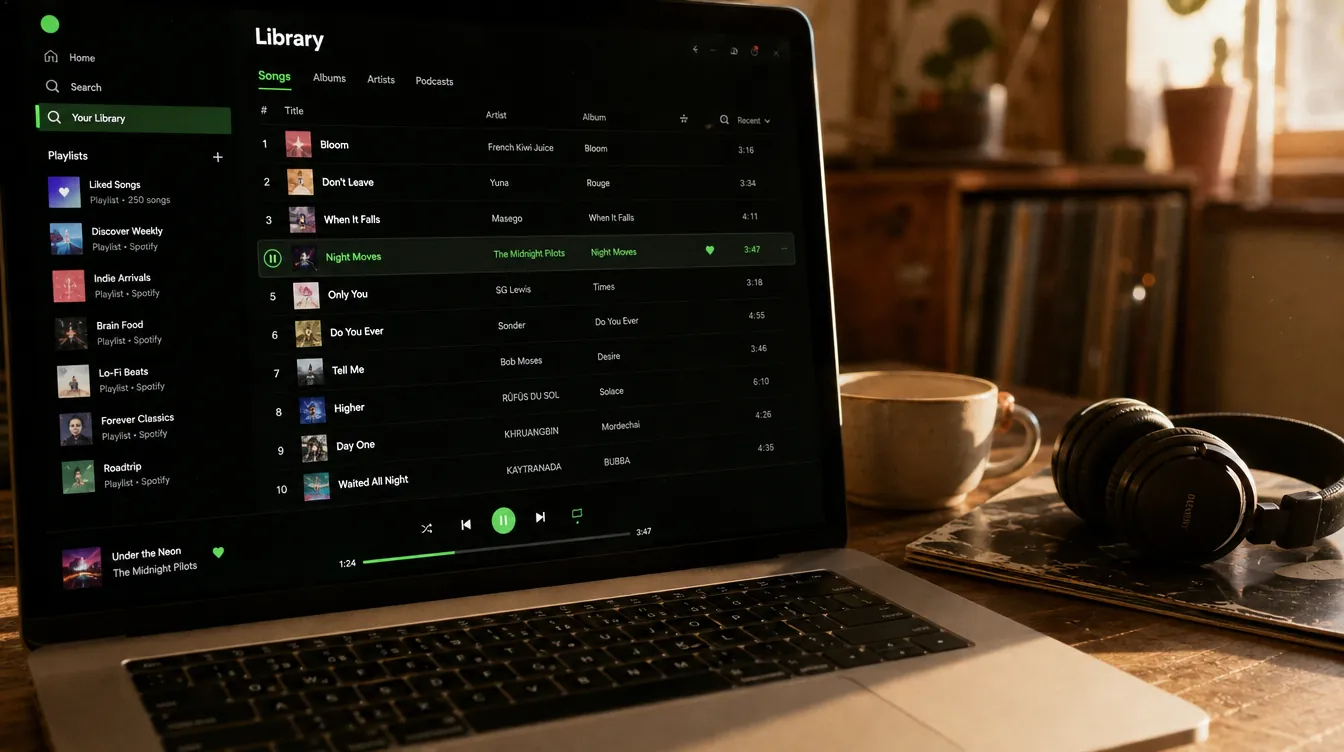
The setup is simple. You own a playlist with real listeners. You release a track of your own. You place that track inside your own playlist. Every play earns you streaming royalties from Spotify.
But the real math is not what most people think.
A playlist with 25,000 monthly listeners does not mean 25,000 plays per track. Each listener might tap into the playlist 2 or 3 times per month. Those plays get spread across every track on the playlist. A top-positioned track might pull 3,000 to 8,000 plays in a single month from that playlist alone.
At $0.003 to $0.005 per stream, that one track in one top position earns roughly $9 to $40 from one playlist in one month. Small. Almost not worth thinking about.
The compounding effect is where this stream becomes serious.
| Setup | Yearly income (range) |
|---|---|
| 1 track in 1 top position on 1 playlist (12 months) | $108 to $480 |
| 4 to 6 own tracks in top positions on 1 playlist | $500 to $2,500 |
| Same setup across 3 to 5 playlists | $2,000 to $12,000 |
Hold a top placement for 12 months. The same track earns $108 to $480 from a single playlist over a year. Now add a second track of yours in another top position. A third. A fourth. Within a year, a curator with 4 to 6 of their own tracks placed in top spots across their own playlists is collecting $500 to $2,500 per year in passive royalties from just one playlist.
Scale this across 3 to 5 playlists, and the same operator is generating $2,000 to $12,000 per year in passive streaming income. The income runs whether the curator is asleep, traveling, or off-platform for a week. Once the tracks are placed, they keep paying every month.
The work is the same curation work you were already doing. The track placement is a one-time action. The royalty stream runs for years.
AI-Generated Music In Your Playlists
This is the stream that did not exist 24 months ago.
AI music tools have crossed a threshold. Suno and Udio (and others) can now produce tracks that sound good enough to sit on real playlists alongside human-made music. A skilled curator can generate their own AI tracks, in the exact style of their playlist, and place them inside that playlist.
The economics are clean. You own the master recording. You own the playlist. You own both ends of the chain. Every play earns you the streaming royalty. No artist to negotiate with. No label to split with.
Spotify currently asks artists to label AI-generated tracks during the upload process. The platform's exact policy around AI music is still evolving, and it is something every curator needs to track carefully. We update operators on the current rules inside the masterclass.
Producing AI music that sits well alongside human-made tracks is a skill of its own. The full production system is laid out in our Producer Upgrade course for curators who want to add this stream to their stack.
Sponsored Playlist Descriptions
This is the brand-deal stream.
Once a playlist reaches a certain size (usually 50,000 followers and up), brands start to notice. Music gear companies, streaming service trials, online music schools, DJ equipment retailers. All of them want to be in front of an audience that is already paying attention to music.
The placement is simple. The brand pays the curator to include a short line in the playlist description: "Sponsored by Native Instruments" or "Try Splice free for 30 days, link in bio." Some deals are one-time. Most are monthly retainers.
| Playlist size (followers) | Typical monthly rate per brand placement |
|---|---|
| 50,000 | $50 to $200 / month |
| 150,000 | $150 to $500 / month |
| 500,000+ | $300 to $1,500 / month |
Curators with multiple large playlists stack several brand deals at once. A network of 3 playlists of 100,000 followers each, with 2 active brand placements per playlist, generates a passive monthly baseline of roughly $600 to $1,200.
The advantage of this stream is that descriptions are evergreen. Once the deal is signed, the income runs automatically. The brand pays. The text sits there. The audience reads it. No additional work after setup.
The catch: this stream only opens once the playlist has real scale. It is not a starting stream. It is a scaling stream.
Modern Radio Promoter Contracts
This is the high-ticket stream.
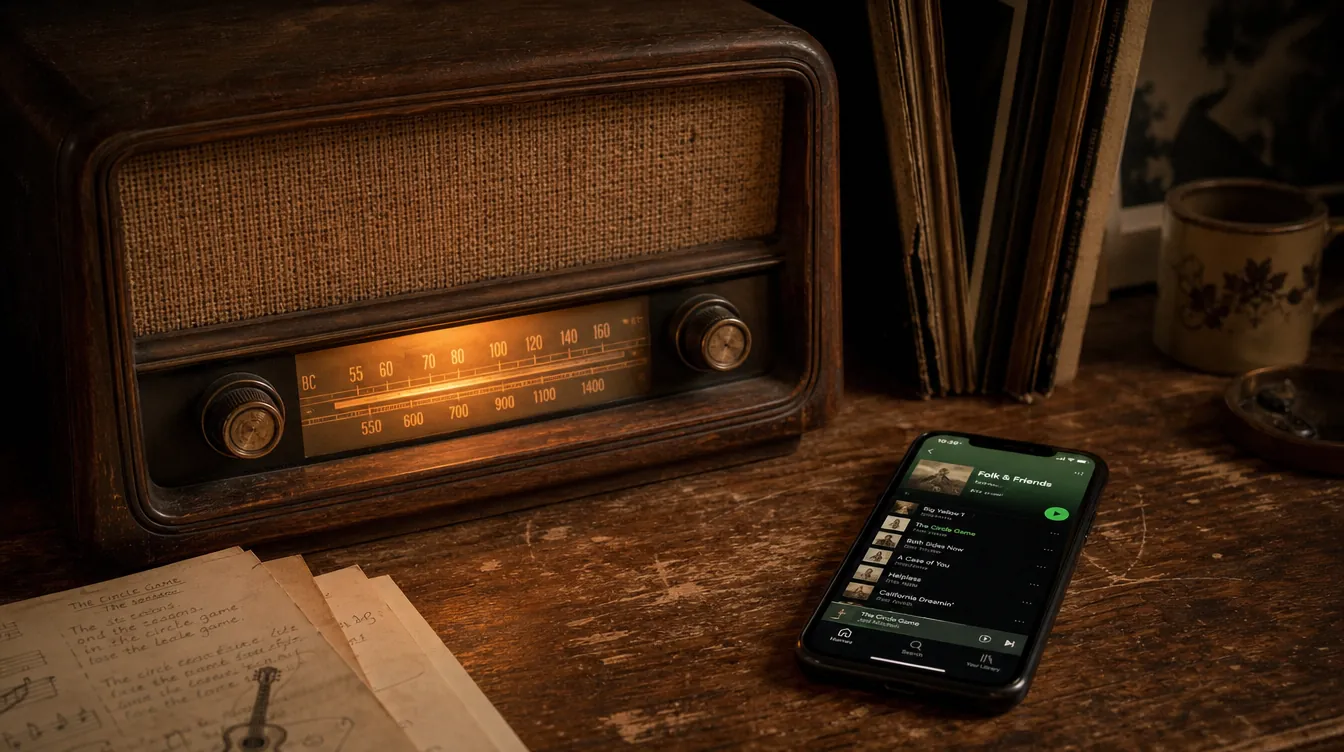
A quick history. In the 1980s and 1990s, record labels paid radio promoters to get their songs in front of terrestrial radio stations. The promoter built relationships with radio DJs and program directors. The role was to make sure the right songs got heard by the right ears.
That role did not disappear when streaming took over. It migrated.
Today, indie labels and independent artists pay top curators on monthly retainers for one specific thing: serious review and consideration of their music. A curator with a strong reputation can structure these arrangements as a paid review service. The label submits a steady flow of new releases. The curator listens carefully, gives feedback, and considers each track against the editorial standards of their playlists. Tracks that genuinely fit the playlist may be added by the curator's editorial choice. Tracks that do not fit are returned with notes.
The structure is review-based, not placement-based. The curator is paid for their time, their listening ear, and their editorial expertise. Not for any guaranteed outcome on a track. This is the same legal model used by submission platforms like SubmitHub at the per-review level. Modern radio promoter contracts are just the retainer version of that model.
| Curator tier | Monthly retainer per label |
|---|---|
| Small curator network | $500 to $1,500 / month |
| Mid-tier with strong genre reputation | $1,500 to $3,000 / month |
| Top-tier with multi-playlist scale | $3,000 to $5,000+ / month |
Some curators run multiple retainers at the same time. A working curator with three label retainers can generate $5,000 to $15,000 in monthly income from this stream alone.
This is what we call the indie radio of the streaming age. The label-to-curator relationship is the most stable, highest-margin business model in modern playlist curation. It requires reputation, real reach, and a curator's willingness to maintain editorial standards over volume. It also requires you to be findable, which is why most working curators publish under a public name.
What This Article Did Not Cover
The 5 streams above are the surface. The full income map goes much deeper.
Inside the free 2-day masterclass we cover 6 more streams we did not touch here:
- How to run many playlists at once so they all earn together
- How to land brand deals that cover your entire playlist network
- How to sign monthly retainers with record labels (the high-ticket plays)
- How to turn a playlist into a real brand and sell merchandise from it
- How to teach other curators and get paid for it
- How to own one specific style of music so completely that artists in that style only come to you
The actual system for building playlists that can hold this kind of income is what we teach inside the free masterclass.
Frequently Asked Questions
How much do Spotify playlist curators actually make in 2026?
Is it legal for curators to charge for reviews?
Can curators make money without owning their own music?
How big does a playlist need to be before it can earn?
How long does it realistically take to build an income-generating playlist?
Shovels Or Gold?
The streaming economy is being rewritten in real time. More music is being released every week than at any point in history. Independent artists are now the majority of releases. AI is accelerating that wave even further. Discovery is the new bottleneck. The people who control discovery are quietly becoming the most valuable players in the music industry.
Whether you are starting at zero or scaling an existing playlist, the 2026 opportunity is real. The question is not whether playlist curation can pay. The question is whether you will be selling shovels or panning for gold.
If you want the full system for building a sustainable curator business, the next step is the free 2-day masterclass.