Can AI Music Get Playlisted on Spotify? We Tested It.
A DJ with 200,000-stream tracks made the slow way ran the AI way through his own playlists. Here is what happened.
Get the Free 2-Day Masterclass →
This track was made by a machine in eleven minutes. The same DJ once spent six months on a track that did 200,000 streams. The machine version is on a real playlist right now.
The DJ Who Decided to Stop Guessing
A DJ we work closely with has a track with over 200,000 Spotify streams. He made it the old way — months of work, late nights, a real studio, years of practice behind it. He knows exactly what a song that connects feels like, because he has built them by hand for over a decade.
Last year he started watching something strange. New tools — Suno and Udio (websites that write a full, finished song from a few words of text) — were producing tracks in eleven minutes that did not sound like toys anymore. They sounded releasable. And the market was filling up fast. Spotify passed 100 million tracks in 2024. Now tens of thousands of new songs arrive every single day.
That is the gold rush. When music becomes this cheap and fast to make, the music stops being the scarce thing. The scarce thing becomes discovery — the playlists that decide what actually gets heard. In a gold rush, the smart money does not dig for gold. It sells the shovels. Playlist curators are the shovel sellers of the streaming age.
So this DJ asked the obvious question. If he can make releasable tracks in minutes, and he already owns the playlists that play them — can the AI tracks actually get on those playlists and earn? Or does Spotify block them?
He stopped guessing and tested it. He ran AI-made tracks through his own real, followed playlists. This article reports exactly what happened — what got accepted, what it earned, and the only two lines that actually matter.
The Short Answer, Up Front
Yes. AI-made music gets playlisted on Spotify in 2026. The tracks went live, sat in real followed playlists, streamed for real listeners, and earned royalties at the exact same rate as everything else.
No removals. No spam flags. No demotion. Spotify treated a well-made AI track like any other track — because to a listener, that is what it is.
Here is the part most articles get wrong. They tell you AI music is risky, that you have to disclose everything, that you are walking a tightrope. That is fear, and fear is the wrong read. The truth is simpler: AI is a production tool, and Spotify treats a track made with it like a track made with any other tool. There is no rule that forces you to announce a song was made with AI. Whether you mention it is your call, not a requirement.
There are exactly two things that actually get a track or an account in trouble. We will name them plainly later, and neither one is "you used AI." The rest of this article shows the test behind that sentence — and why a DJ who is not doing this yet is leaving money on the table.
What Spotify Actually Allows (And the Two Things It Doesn't)
Before the results, the real rules — not the rumors.
Music made with AI tools is allowed. Spotify's own leadership has said publicly that AI is a tool, and that tracks made with it are welcome on the platform. There is no ban on AI music. There is no special "AI tax" on royalties. A song made with AI help is, to Spotify, just a song.
You do not have to disclose it. This is the myth worth killing. The industry is slowly building optional labels for AI involvement, and some artists choose to use them. But there is no rule today that forces a producer to announce a track was made with AI. Disclosure is a choice, not a requirement. Plenty of releasable, streaming, earning tracks never say a word about how they were made — and nothing happens, because nothing is supposed to.
So what does Spotify act against? Two things, and only two things really matter:
One — mass spam farming. Generating hundreds or thousands of near-identical clips and dumping them to milk fractions of a royalty. Spotify built a spam filter for exactly this. It is not aimed at your one good track. It is aimed at the bot farms. Make real tracks, not a thousand fake ones, and this never touches you.
Two — impersonating a real, named artist. Using AI to clone a famous singer's actual voice, or passing your track off as theirs, is banned and can trigger legal trouble. This is a hard line. Do not go near it. It has nothing to do with making your own original music with AI.
The plain version: Spotify is not fighting AI music. It is fighting spam farms and identity theft. Your original, AI-made house track — the one you finished and stand behind — is nowhere near either line. A curator (someone who runs a playlist they own and grow — see our Curator Earnings Index for what those channels are worth) breaks no rule by adding it.
The Test: AI Tracks on His Own Playlists
Here is exactly what the DJ did. Not a lab experiment. A real-world test, run the way a working producer would actually work.
The setup. He made several house and electronic tracks using AI generation tools as the starting point. Then he did what he has always done: he shaped them. Arranged the sections. Cleaned the mix. Cut the weak eight bars. Pushed the drop. Made each one a track he would actually drop in a set. The AI did the slow technical lifting. His ear made the calls — the same ear behind the 200,000-stream track.
The placement. The finished tracks went out through a normal distributor and into the real, followed playlists he owns and runs. The same playlists that hold human-made tracks from other artists.
What he watched for: Did they go live? Did they stream? Did they earn? Did Spotify flag, demote, or pull them? Did listeners react any differently?
What Happened
The tracks went live with zero friction. They appeared in the playlists, played for real listeners, and earned streaming royalties at the same per-stream rate as any other track. A single well-placed track in a followed playlist pulled the kind of numbers a human track pulls — a few thousand plays a month, building over time.
Nothing got flagged. Nothing got removed. Nothing got demoted. And the listeners? They had no idea, and on a good track they did not care. They reacted to whether the song moved them, not to how it was built.
That is the entire point. On a finished track, the tool that made it is invisible. Nobody listening to a great house record asks which plugin made the bassline. AI is just the newest plugin.
And here is the math that made the DJ sit up. The old track took months and did 200,000 streams once. The new method lets him make playlist-ready tracks in a fraction of the time — and drop them straight into channels he already controls. He is not waiting on a label. He is not waiting on submissions. He makes the music and he owns the radio that plays it. That combination — making the tracks and owning the playlists — is the cash cow.
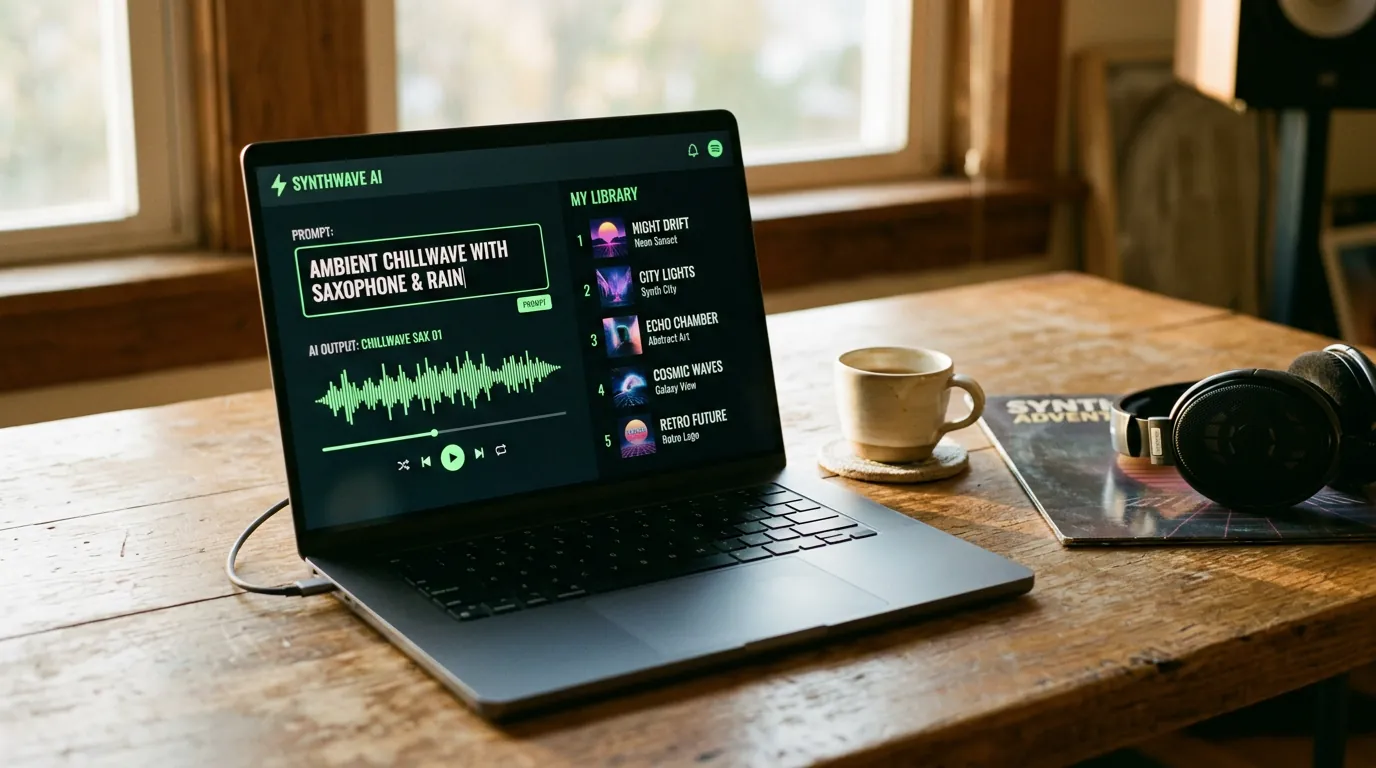
Made in an AI tool, finished by a hand that has done 200,000 streams the hard way, streaming on a real playlist. The gap between "made by a machine" and "made by an artist" is mostly fear.
The Only Two Lines You Cannot Cross
Skipping this part is how a small number of people manage to get themselves banned. But notice what is not on this list. "Using AI" is not on it. "Not disclosing" is not on it. There are only two real lines.
Line one: do not run a spam farm. The fast path to losing an entire artist account is generating hundreds of near-identical clips and uploading them to farm royalties. That is what Spotify's spam filter exists to catch. One real track beats a hundred fake ones, every time. Make music you would actually play. You will never trip this wire.
Line two: do not impersonate a real, named artist. Cloning a famous singer's actual voice, or passing your work off as theirs, gets removed and can bring lawyers. This is theft, not production. Stay on your own original music and this line is irrelevant to you.
That is the whole list. Two lines, both of which are obvious once you say them out loud, and neither of which a normal DJ making original tracks will ever go near.
There is one quiet thing worth naming, though — and it is not a rule, it is a fact. AI does not give you taste. If you do not already know what a good track sounds like, AI just helps you make average music faster. The DJ's test worked because he is a real producer with a real ear. The tool did not supply that. It never does. Which is exactly why the DJs who already have taste are the ones positioned to win here — and the ones still sitting it out are the ones leaving the money on the table.
There is also a craft question some producers ask: can you make AI tracks that pass the detectors some platforms and tools use to flag AI audio? The answer is yes, and it is a learnable skill — finishing, re-recording, and processing tracks so they read as fully human-made. That is a production-level topic, and it is exactly what the Producer Upgrade course covers in detail (more on that below).
Analog desk, digital playlist. The gear keeps changing. The job — making what is worth hearing, and owning where people hear it — never has.
Why This Is the Cash Cow
Most coverage of AI music asks whether it threatens artists. From inside the booth, that is the wrong question. The right one is: what does this hand to the people who already run playlists?
Everything.
A curator can now fill their own channel with their own music, fast. A DJ who owns a playlist used to wait on submissions or pay other producers to fill it with quality tracks. Now they can make playlist-ready tracks themselves in a fraction of the time, and place their own music in the channels they control. Every play earns a royalty. Across many tracks and a full year, that compounds into a real income stream — the kind of numbers we break down in the Curator Earnings Index.
The flood makes good curation worth more, not less. When ten thousand new tracks arrive a day, listeners cannot sort them. They lean harder on the playlists they trust. The curator's job — choosing what is worth hearing — gets more valuable exactly as the music gets cheaper to make. When everyone can dig, the person who sells the map gets paid.
Curators own the one thing AI cannot generate: trust. A faceless account uploading AI tracks starts at zero. A DJ with a followed playlist, a real audience, and a track record of good picks starts with an audience that already trusts their ear. They can drop a new track into a warm room. The machine made the track. The curator made the room.
Put those together and the picture is blunt. Make the music for almost nothing. Own the playlists that play it. Earn on every stream, on tracks you made and tracks you placed. That is the cash cow — and the DJs who are not running it yet are the ones it will leave behind. If you have not yet read the case for owning the channel itself, start with why DJs should learn AI production.
This Is a Skill You Can Learn in Weeks, Not Years
Everything in this test — making a releasable AI track, finishing it so it sounds fully human, and getting it clean past AI detectors — is a method, not a talent. The Producer Upgrade course walks a DJ through the whole path: from the first generated idea, to a finished playlist-ready track, to masking it so it reads as 100% human-made. It is the exact production process behind the tracks in this test.
It is built for DJs who want to make their own music — and own the cash cow — without spending years in a studio first.
First, Own the Channel That Plays the Music
A great AI-made track still needs somewhere to land. The DJFREEDOM Masterclass is a free 2-day video course on building a Spotify playlist asset from zero — the home for every track you will ever make.
- Day 1: Playlist strategy, naming, positioning, and your first 50 tracks.
- Day 2: Growth tactics, submission platform setup, and your first revenue stream.
No cost. Just the practical steps from operators who run real playlists with real income.
Frequently Asked Questions
Can AI-generated music get added to Spotify playlists in 2026?
Will Spotify remove or ban my track for using AI?
Do I have to disclose that I used AI?
Does AI music earn the same royalties as human-made music?
Why do DJs and curators have an advantage with AI music?
Your Move
So, can AI music get playlisted on Spotify? Yes. A DJ with 200,000 streams the hard way tested it on his own playlists, and the AI tracks streamed, earned, and stayed up — clean.
The flood of AI music is not slowing down. It is speeding up. That flood does not lower the value of taste, an audience, and a playlist you own. It raises all three. The DJs who learn to make good tracks fast and own the channels that play them will be the ones the flood pays. The ones who sit it out — telling themselves it is risky, or beneath them, or not real music — will be the ones it quietly passes by.
The tools are here. The lines are short and obvious. The cash cow is sitting in plain sight. The only question left is whether you build it before everyone else does.